





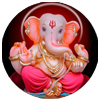


Ganesh Birth
Ganesh Chaturthi is one of the most popular festival which is celebrated grandly. This is the birthday of God Ganesha. It falls on the 4th day of the bright fortnight of Bhadrapada (August-September). It is observed throughout India, as well as by devoted in many parts of the world.
Ganpati is the elephant-headed God. He is worshipped first in any prayers. His names are repeated first before any auspicious work is begun, before any kind of worship is begun. He is the God of power and wisdom. He is the eldest son of Shiva and the brother of Skanda or Kartikeya. He is the energy of Shiva and so he is called the son of Shankar and Parvati.
Each of the Puranas has a different story regarding the birth of Lord Ganesha. In some he is the manasika putra (mind-born son) of Lord Shiva. In others he is the creation of Parvati. In still others he is the son of Shiva and Parvati.
The most popular legend deals with the birth of Lord Ganesh to Parvati. Once while Parvati was going for her bath, she rubbed off the dust and oil from her body and out of it created the figure of a young boy. She infused life into the figure and told him he was her son and should guard the entrance when she went to bath.
Soon after, Shiva came to see Parvati but the young boy blocked his way and would not let him in. Shiva, unaware that this lad was his son, became furious and in great anger fought with the boy whose head got severed from his body in the ensuing battle.
Parvati, returning from her bath, saw her headless son, and in aggrieved anguish threatened to destroy the heavens and earth.
The gods and Shiva pacified her and the latter sent out his ganas, or hordes, to bring the head of the first living being with his head towards the north (the auspicious direction associated with wisdom). The first living creature they found sleeping with his head to the north was an elephant. They brought the head of this animal and Shiva placed it on the trunk of Parvati's son and breathed life into him.
Parvati was overjoyed and embraced her son, the elephant-headed boy whom Shiva named Ganesh, the lord of his ganas “ Ganpati”
Ganesh Festival Celebrations In Belgaum
After commencing the Sarvajanik mandals for Ganesh Festivities in Pune, Tilak came to Belgaum where he asked Belgaumites to come together, and in 1906, the Zenda Chowk Ganesh Utsav Mandal was formed.
Tilak was here in Belgaum in 1905 and he himself laid the first bamboo pillar of the pandal and ever since then the the legacy has been carried on by the Zenda Chowk Ganesh Utsav Mandal.
In Belgaum there are 6 Mandals which are a century old and the oldest is the Zenda Chowk Ganesh Utsav Mandal.
Govindrao Yalgi and Gangadharrao Deshpande took out a procession of Tilak from Railway station to Zenda Chowk.
Zenda Chowk Ganesh Utsav Mandal now makes a collection of over a crore of rupees and uses the collected fund for various public service activities. From the year 2005, no public donations are collected by the mandal, all the expenses are borne by the interest received on the deposit. The Mandal helps poor students and this year also organized a body building event.
The number of Sarvajani (public) Pendals has gone up to 357 in Belgaum city this year. There will be huge rush for last 3 days to see ganesha and you can find the roads are busy late nights with some shops open and all the vehicles of maize,various dishes etc are available.That apart, 2850(approx) public Ganesh pendals are being set up across the district. The grand finale to be marked by a huge immersion procession in the city and other parts of the district on the eleventh day.
The grand finale to be marked by a huge immersion procession on the eleventh day at Kapileshwar, Jakinhonda(Goaves overbridge) Organ Lake Angol Lake and Old Belgaum and other parts of the district.Huge number of Ganesh idiols are immersed with a huge queue and the immersion goes upto 4am early morning due to heavy rush.
There will be procession of Ganesha while performing visarjan where from many places like Kolhapur etc they are called to perform shows like lazims,dumbles,dramas etc.
Ganpati Bappa Morya !!
Ganesh Visarjan Procedure
1) As days pass so soon during Ganesha festival we will be wanting still it should be prolonged but time comes to perform Ganesha visarjan. Ganesha brings hope, success, happiness, togetherness to all home during his brief stay he removes obstacles so Ganesha is also called as ‘Vignaharta’ while returning he carries problems and unhappiness.
2) You should perform Aarti before visarjan were all the family members are present. Usual Ganesh Mantras and Aarti prayers should be chanted as earlier days of Ganesha is performed.
3) The visarjan ritual begins with the Uttarang puja which involves offerings which namely deep (oil lamps), pushp (flowers), dhoop (incense), gandh (fragrance) and naivedya (food) to Ganesha.
4) Once aarti is chanted after sprinkling akshat or raw rice upon the lord.
5) You should thank Ganesha for visiting your home and bringing prosperity happiness and auspiciousness and also thank him for taking away all difficulties with him and ask for his pardon for any mistakes committed.
6) The murti of Ganesha is then lifted from its seat and carried to the threshold where it is turned to face the house and placed were the visarjan is to be performed.
7) It is a belief that any guest who receives curd and rice is sure to visit again so a spoonful of curd is poured into Ganesha outstretched palm.
8) Take some water and sprinkle it on the person performing the Visarjan.
9) The person performing the Visarjan should remove all garlands,ornaments and decorations on Ganesha.
10) Those garlands should not be thrown in the river or water body but should be deposited in a hole in one's compound or in appropriate spot given by authorities.
11) Now it is time to lift up the Ganesha and all people around can chant Ganapati Bappa Moriya.Once it is lifted never look back at home with murti in hand and walk towards the immersion point.
12) Some devotees perform brief another aarti at the spot before immersing.While immersing the murti chant ...Ganapati Bappa morya...Pudchya varshi lawkar ya…..and immerse Ganesha.Take some water after Ganesha is immersed.
13) You can also perform a symbolic immersion by sprinkling water on Ganesha. This is if it is made of metal or porcelain and you plan to use it next year.
14) Such murtis should be carefully kept in the puja room or in a spot without disturbing it. Daily prayers should not be offered to this murti. Prayers to this murti should only be offered during Ganesh Chaturthi.
How To Perform Ganesh Puja At Home
Ganesh Chaturthi or Vinayaka Chaturthi is one of the most colorful and widely celebrated festivals in India. Large number of people observe Ganesha Chaturthi poojas at home. Here is an explanation on how to perform Ganesha puja at home as mentioned in Hindu scriptures.
Ganesha puja on the Chaturthi day is usually performed at noon but nowadays people perform it when all the family members are present.
Requirements
1) A Clay image of Lord Ganesha.
2) Red flowers
3) Druva Grass blades
4) Modak (jaggery filled sweet)
5) Coconut
6) Red chandan (Sandalwood paste)
7) Incense and agarbathis
The Puja
1) First clean the house and take a bath.A Clay image of Lord Ganesha is installed in a raised platform.
2) Pray to Lord Ganesh and you can recite mantras or bhajans dedicated to Lord Ganesha.
3) Next step is to invoke Ganesha into the image. This is known as pran-prathishta. The Pran Prathista mantra in Sanskrit to be invoked is found in the Rig Veda and is part of Ganesh Suktha.
4) Now Ganesha is installed in the idol and one can perform arati and light the lamps. Some people perform the shhodashopachara, which are 16 forms of praying tribute to Ganesha. (This ritual is usually performed by the priests, you can skip this.)
5) Offer 21 blades of Druva Grass.
6) Offer 21 modakas
7) Offer red flowers
8) The number 21 signifies - the five organs of perception, five organs of action, five vital airs (pranas), five elements, and the mind.Apply a tilak using red Sandalwood paste.
9) Break the coconut or just keep it along with the idol. You can also keep fried grains. (The food of the rat – the vehicle of Ganesha).
10) You can also recite the 108 salutations dedicated to Lord Ganesha or read the Ganesha Upanishad or just simply pray.While performing Ganesha Puja at home, you can always be flexible. The strict rituals are meant for Vedic priests. All you need to be careful is to perform the pujas with a clean body and clean mind.
Origin Of The Ganapati Festival
The Ganeshutsav was celebrated at the houses of leading Sardar families like Patwardhan, Mujumdar, Khasgiwale etc. In 1893, Sardar Nanasaheb Khasgiwale for the first time celebrated the utsav as a public festival and that year Ghotawdekar, Kasgiwale and Bhau Rangari these three Savajanik Ganesh utsav's were celebrated and for the first time There was a procession also taken out on the roads. The well known freedom fighter and statesman, Lokmanya Bal Gangadhar Tilak, saw in the festival a way of uniting people in a common cause and in this manner a possible means of bringing about political consciousness under the guise of a religious celebration, with freedom for India being the ultimate goal. Lokmanya Tilak also started celebrating Ganeshutsav as a public festival by establishing a Sarvajanik Ganpati at Vinchurkarwada in 1894 and today it is the most popular event in the State. It was a unique move by this freedom fighter, which he achieved with the Ganpati Visarjana or immersion procession which is taken out on the final day of the ganesh festival.
The ten-day festival starts from the fourth day of the bright half of the lunar month, Bhadrapada and continues till the fourteenth day. Thousands join in and form the many processions that fill the streets when the time comes for the image to be immersed in water...the sea, river or lake. The festival brings with it a feeling of comradeship. Everyone wants to participate.
On the first day the clay form of Ganpati is brought home with great devotion. Prayers are said and songs chanted to the accompaniment of music from the mridanga or two-sided drum and the jhanj or cymbals. Some devotees select and buy their Ganpati on the same day and others place their orders months in advance. The figures are often very large, standing several metres high. These larger Ganesh images are usually ordered by neighbourhood puja committees, the entire neighbourhood contributing towards the purchase
After the Ganpati image is collected it is ceremoniously installed in a place of honour and various rituals take place. The Ganpati is decorated with ornaments, flowers and lights. Puja and aarti are performed every morning and evening using flowers, rice, betel nuts and leaves, turmeric, red powder, coins and oil lamps. Men and women, the old and young all join in.Special sweets called modaks are steamed or fried for offering to Ganpati. Modaks are small rice or wheat flour dumplings stuffed with coconut and jaggery. These are served at the festive meals during the festival. Additionally, a large variety of savoury and sweet snacks such as karanjis, ladoos, chaklis, kadbolis and anarsas are distributed to devotees and guests during the pujas.
On the tenth day of the festival this happy loving god leaves for his celestial home and is immersed in water. Huge processions made up of different groups all accompanying the image of Ganpati that they have worshipped, make their way by foot to the immersion site. The very large images are transported by truck. All this is done to the accompaniment of dancing and singing. The mood is jovial with everyone chanting, over and over again, "Ganapati Bappa Morya, Pudhchya Varshi Lavakar Yaa..." calling Ganpati to come again soon next year.
The sight of the crowded streets, the different Ganesh images and the happy people is an amazing spectacle. In large towns special roads are demarcated for these processions and the traffic police and users of cars, buses and two-wheelers display notable patience with the crowds and never-ending processions.